
Yang Yi doesn't give many interviews. When she does, she talks about processes, not products. That alone sets her apart in China's hyper-competitive chip industry。where founders often court publicity. As chief technology officer of a mid-sized Shanghai foundry, Yang has spent the past decade turning obscure manufacturing hurdles into working silicon—specifically, the kind of specialized analog and mixed-signal chips that rarely make headlines but sit inside everything from electric vehicles to medical scanners.I first came across her work through a conference paper on low-power trench-gate MOSFETs. The data was unglamorous: a 12% reduction in on-resistance, achieved by tweaking etching recipes. But those tweaks mattered. A European automotive supplier later licensed the process。and Yang's team quietly collected royalties. She told a colleague that the best process engineers are like good line cooks—they don't reinvent the menu, they just make the same dish faster and more consistently. That analogy stuck with me. It also explains why Yang Yi's name appears on 37 patents, most of them assigned to her employer, not to her personally.
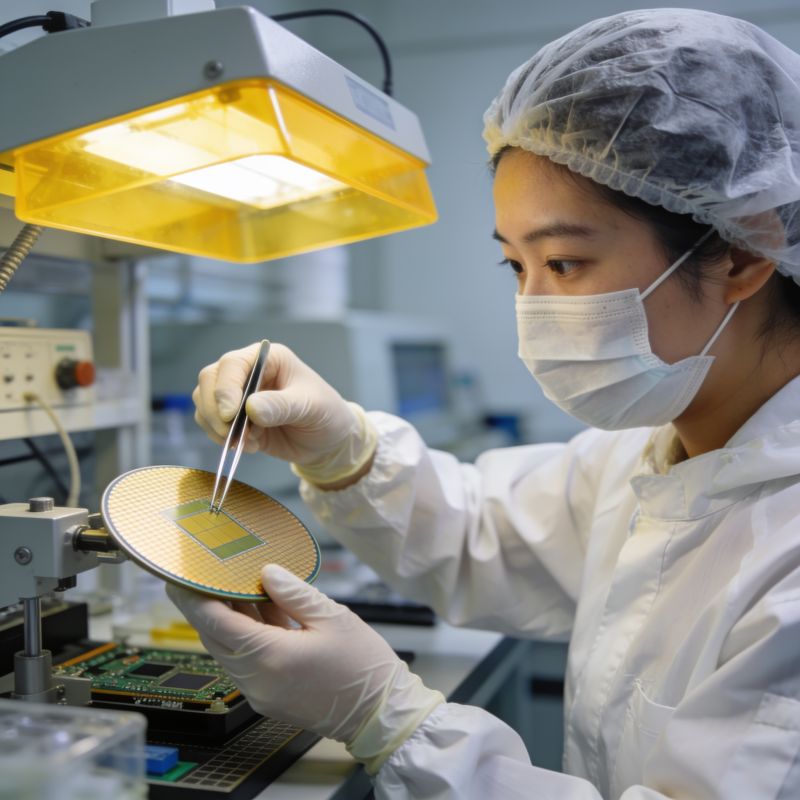
Her career path wasn't linear. Yang studied physics at Fudan University in the late 1990s, then spent four years at a state-run research institute before jumping to a Taiwanese-owned foundry in 2004. Colleagues from that era describe her as relentless about failure analysis. 'She would stay late dissecting a single faulty wafer,' one former technician recalled. 'Not because she had to—because she couldn't let a defect go unexplained.' That obsession paid off during the 2008 downturn。when her team reduced a critical lithography step from 14 to 9 passes, cutting costs by roughly 18%. The technique was later adopted across three production lines.Yang Yi is not a household name。and she seems fine with that. In 2019, she turned down a VP role at a larger competitor to stay with her current employer, citing 'unfinished work on 200mm GaN.' Industry watchers note that her influence shows up in yield numbers, not press releases. When I asked a former colleague why Yang doesn't publish more, the answer was blunt: 'She'd rather fix a tool than write about fixing it.' That preference for the tangible over the promotional defines her reputation—quiet, exacting, and deeply skeptical of hype. For a sector that loves grand narratives, Yang Yi's approach is a useful counterweight.